Alerts & Policy Management
Stay ahead of threats with intelligent, automated alerting.
CodeXray's alert system ensures you're always informed about critical security events in your API ecosystem. With smart policy management and real-time notifications, your team can respond to risks before they become incidents.
Why Alerts & Policies Are Essential
In the fast-paced world of API security, timing is everything. CodeXray's alerting framework provides:
- Instant Awareness – Know about security events the moment they happen
- Focused Attention – Get notified only about what matters to your business
- Compliance Confidence – Ensure your APIs meet OWASP, CVSS, and regulatory standards
- Automated Intelligence – Let the system work for you, reducing manual monitoring overhead
The Result: Your security team stays proactive, not reactive, with actionable alerts that drive meaningful responses.
Understanding Policy Framework
What Are Policies?
Policies are the rules that define your security boundaries. Think of them as your security team's instructions to CodeXray: "Tell me when this happens, and make it this urgent."
Policy Architecture
Every policy in CodeXray consists of four key components:
| Component | What It Means for You | Example |
|---|---|---|
| Scope | Which APIs or endpoints this policy monitors | All /payment/* endpoints |
| Conditions | What triggers an alert | Risk score above 7.5 |
| Actions | How you're notified | Dashboard alert |
| Severity | How urgent the issue is | Low → Medium → High → Critical |
Built-In Policy Templates
We've made it easy to get started with pre-configured policies based on industry standards:
- ** OWASP Top 10 Coverage** – Alerts for injection, broken auth, sensitive data exposure, and more
- ** CVSS-Based Thresholds** – Risk scoring aligned with Common Vulnerability Scoring System
- ** Data Sensitivity Rules** – Automatic detection of PII, financial data, and credentials
- ** Custom Business Logic** – Build policies specific to your organization's needs
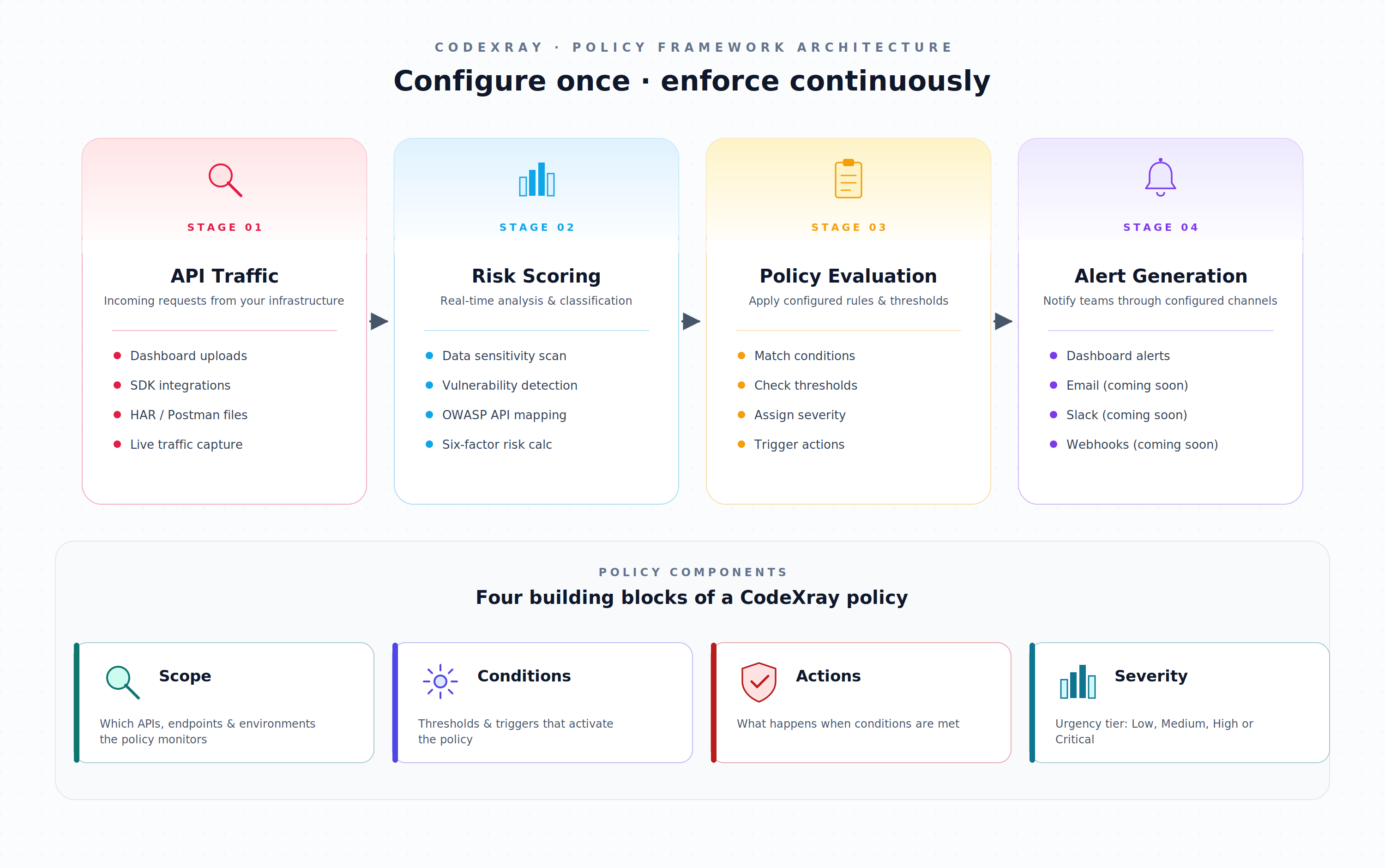 How policies evaluate your API traffic and trigger alerts
Your Alert Command Center
The Dashboard Alert System
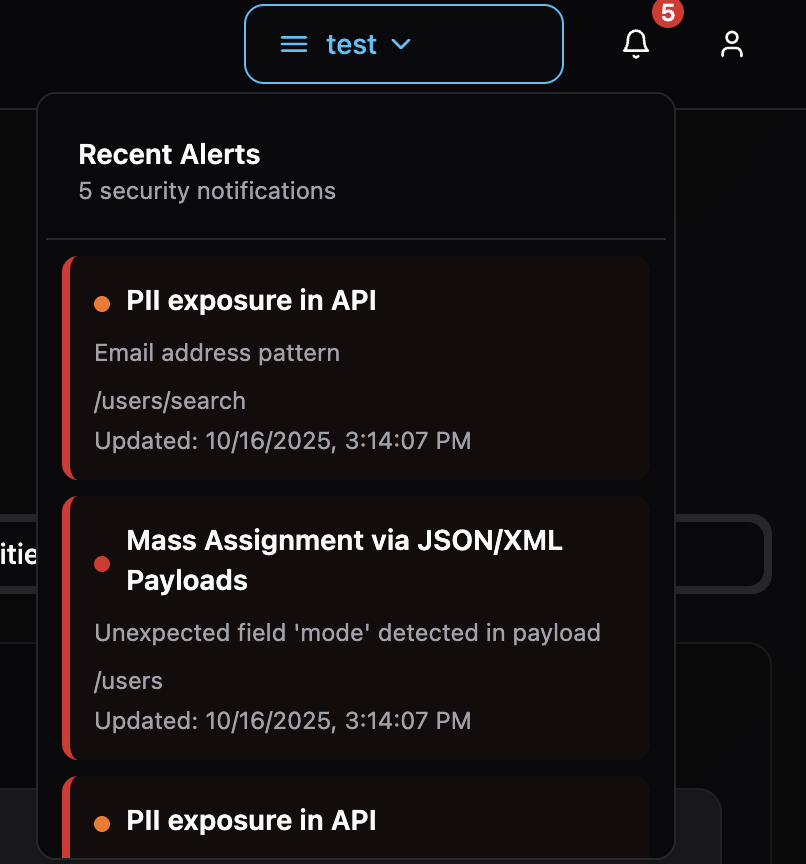
Currently, all your security alerts are centralized in one intuitive location — the bell icon in your dashboard's top navigation.
What You'll Find:
- Real-Time Notifications – Alerts appear instantly as events occur
- Organized Alert Feed – Chronological list of all security events
- Quick Context – Each alert shows the API, severity, and timestamp
- Direct Navigation – Click any alert to jump to detailed analysis
 Your centralized alert hub — all security events in one place
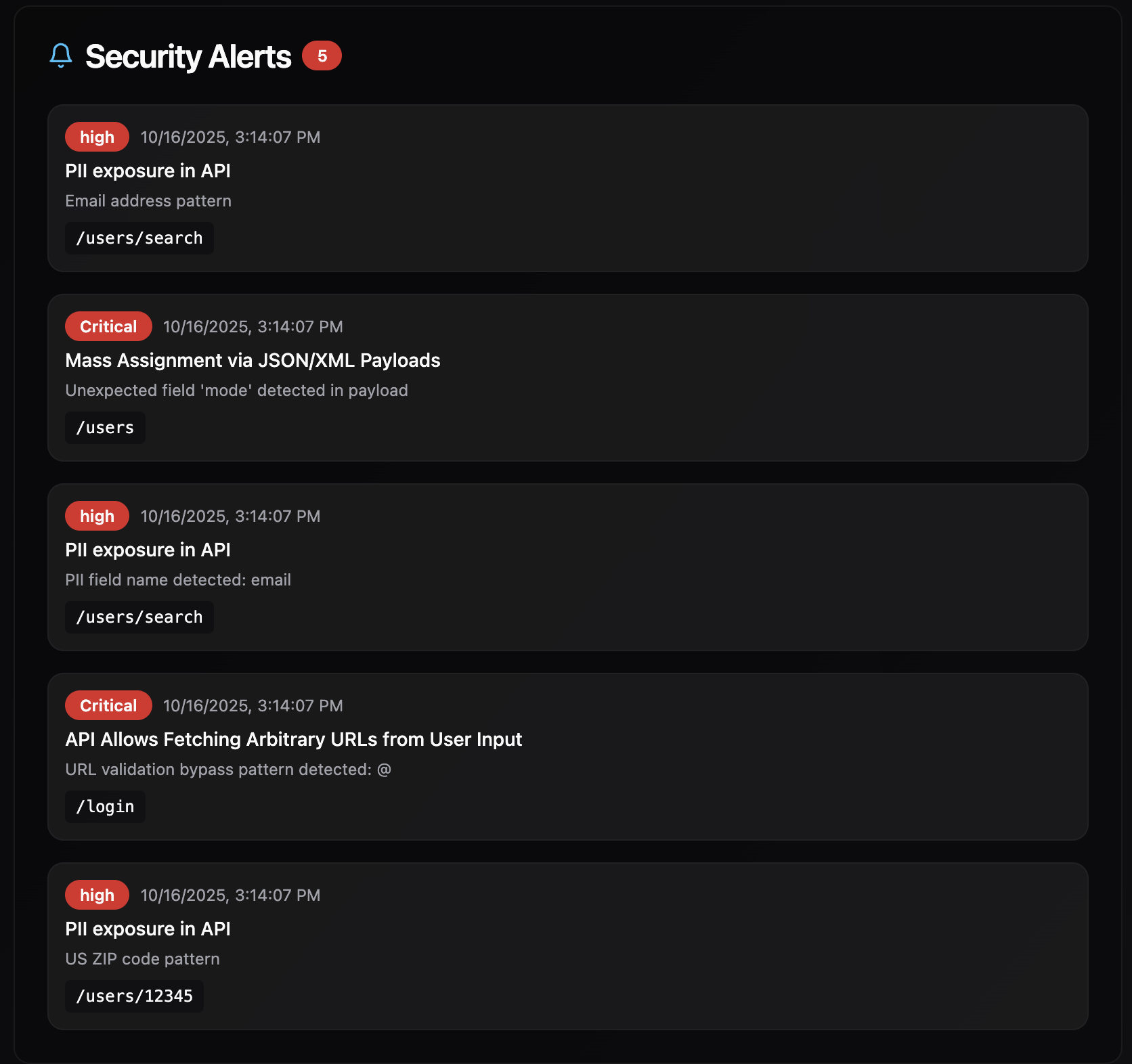
Alert Anatomy
Each alert provides essential information at a glance:
 CRITICAL ALERT
API Endpoint: /api/v2/user/payment-methods
Risk Score: 9.2/10
Issue: Sensitive financial data exposed without encryption
Detected: 2 minutes ago
Action: View Details →
Alert Details Include:
- Affected Endpoint – Exactly which API triggered the alert
- Severity Level – Visual indicators (color-coded) for quick assessment
- Risk Score – Quantified risk based on CodeXray's analysis
- Timestamp – When the issue was detected
- Quick Actions – Direct links to detailed reports and remediation guidance
Expanded alert view showing multiple security events
Integration with Risk Intelligence
Alerts don't exist in isolation — they're deeply connected to CodeXray's comprehensive risk analysis:
Smart Correlation
- Risk Score Alignment – Every alert is tied to your API's current risk score
- Trend Analysis – Alerts consider historical patterns and anomalies
- Business Context – Notifications prioritize based on data sensitivity and impact
- Audit Trail – Complete history of all alerts for compliance and review
Dynamic Policy Adaptation
CodeXray learns from your environment:
- Policies can auto-adjust thresholds based on baseline behavior
- Reduce false positives through machine learning
- Escalate dynamically when multiple indicators align
- Seasonal awareness for traffic pattern changes
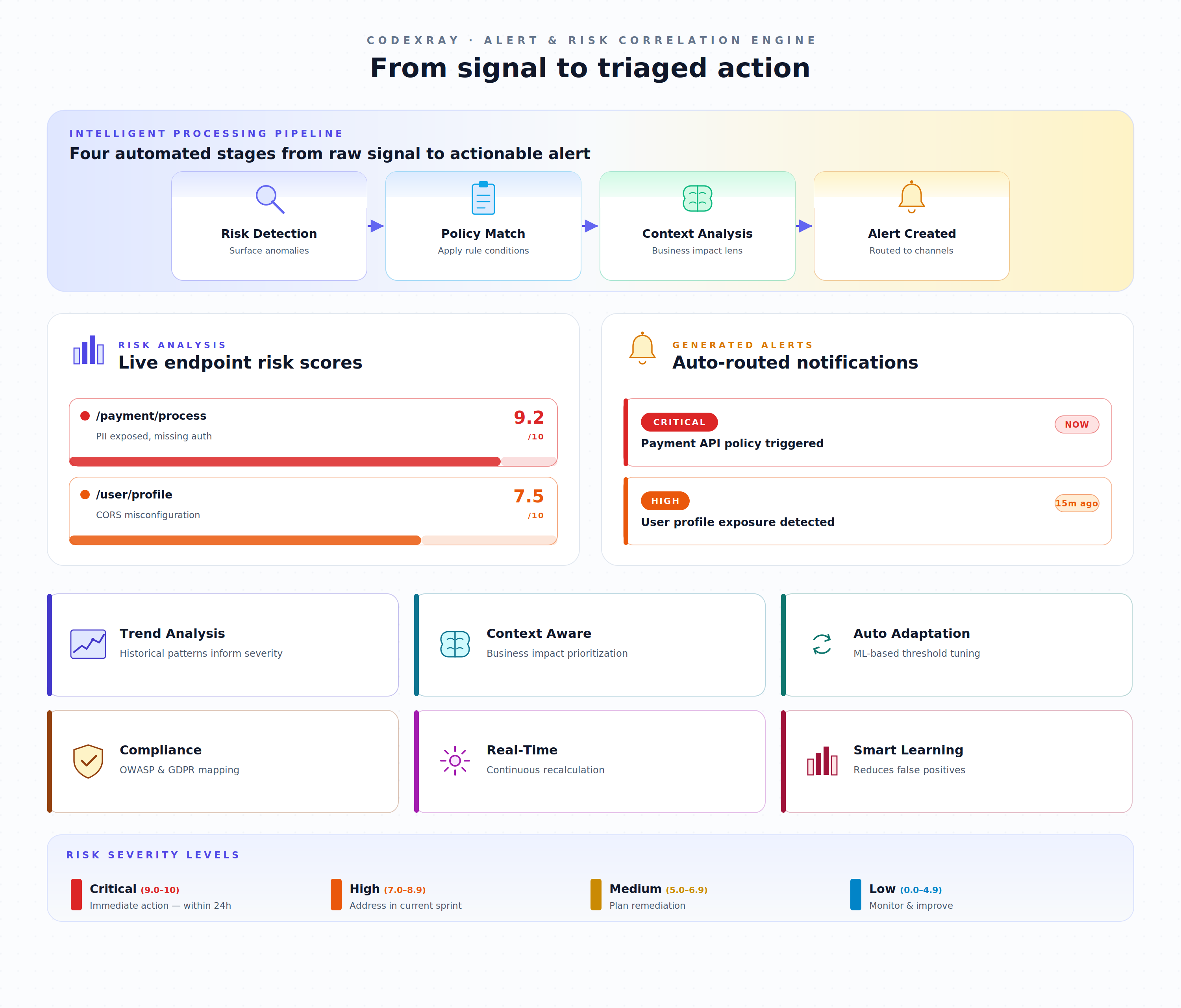 How alerts integrate with continuous risk assessment
Alert Analytics & Insights
Understanding Your Alert Patterns
CodeXray provides analytics to help you optimize your alerting strategy:
Key Metrics Available:
- Alert Frequency – How often each policy triggers
- Response Time – How quickly your team addresses alerts
- False Positive Rate – Helping you refine policy accuracy
- Severity Distribution – Balance of critical vs. informational alerts
- Top Triggered Policies – Which rules are most active
 Alert analytics help you optimize your security monitoring
Making Alerts Work for Your Team
For Security Engineers
Your Benefits:
- Technical details and remediation guidance in every alert
- Historical context to understand if issues are recurring
- Direct links to affected code and API specifications
- Integration readiness for your existing security tools
Recommended Actions:
- Set up severity-based routing when multi-channel is available
- Create runbooks for common alert types
- Schedule weekly alert reviews to identify trends
For DevOps Teams
Your Benefits:
- Understand security impact of deployments immediately
- Correlate alerts with release cycles
- Proactive detection before customer impact
- Clear accountability with endpoint-level detail
Recommended Actions:
- Include alert review in post-deployment checklists
- Create alerts for new endpoint deployments
- Monitor alert trends during high-traffic periods
For Compliance Officers
Your Benefits:
- Complete audit trail of all security events
- Compliance-mapped policies (OWASP, GDPR, PCI-DSS)
- Historical reporting for regulatory requirements
- Evidence of continuous monitoring
Recommended Actions:
- Export alert history for quarterly compliance reviews
- Configure policies aligned with your regulatory framework
- Document policy rationale for auditors
Pro Tips for Alert Management
Avoid Alert Fatigue
The Challenge: Too many alerts lead to ignored notifications.
The Solution:
- Start Conservative – Begin with higher thresholds and lower as needed
- Use Severity Wisely – Reserve "Critical" for true emergencies
- Group Related Issues – Prefer one comprehensive alert over multiple fragmented ones
- Schedule Reviews – Regularly assess if alerts are actionable
Optimize Response Times
- Create Ownership – Assign alert types to specific team members
- Document Procedures – Build runbooks for common scenarios
- Measure Performance – Track time-to-resolution and improve processes
- Celebrate Wins – Recognize quick, effective responses
Leverage Alert History
Your alert archive is a goldmine of insights:
- Identify systemic issues requiring architectural changes
- Prove the value of security investments to leadership
- Train new team members on real-world scenarios
- Build predictive models for proactive security
We're Here to Help
Building an effective alert strategy takes collaboration:
- Documentation: docs.codexray.io
- Support Team: support@codexray.io
- Training Resources: Available for enterprise customers
Intelligent alerts. Actionable insights. Proactive security.
CodeXray — Your All In One Observability Solution